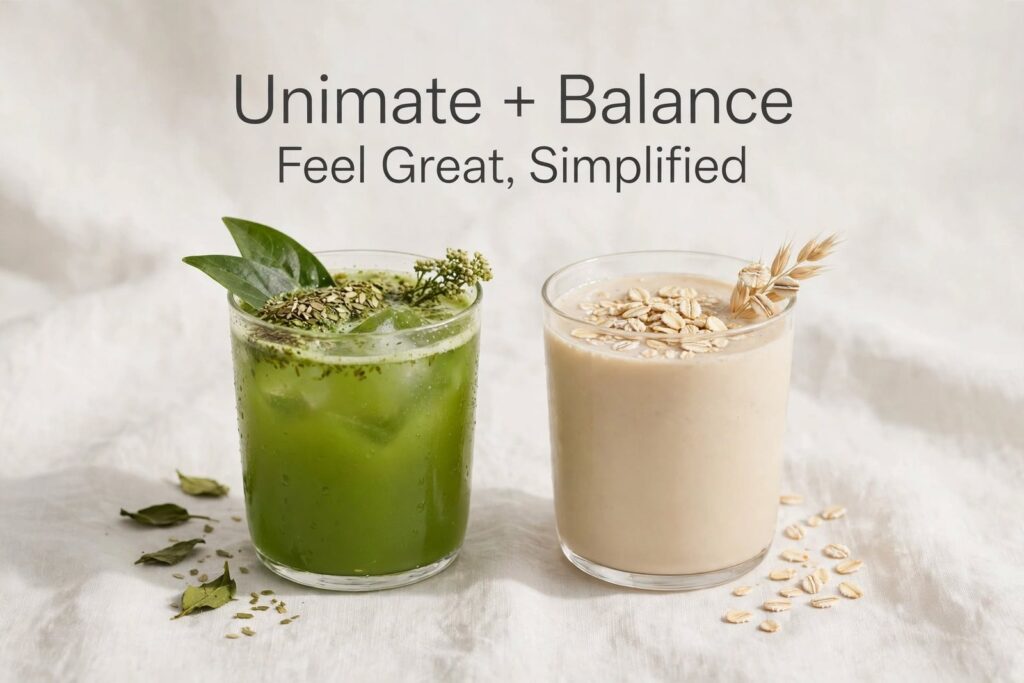
What Is Unicity Balance? A Plain-Language Look at the Fiber Drink in the Feel Great System
Disclaimer: This post shares product label information and public sources. It is not medical advice. This product is not intended to diagnose, treat, cure, or prevent any disease. Individual results vary.
What is Unicity Balance?
Unicity Balance is a fiber drink mix. It is one of the two products in the Feel Great system, together with Unimate. In some countries it has also been sold under the names Bios Life Slim or Bios Life S.
Balance is part of my own daily Feel Great routine. In this post I am not going to talk about results. I just want to walk through what the product reference sheet says, how the fiber amount compares with Canada’s daily value, and a few things to keep in mind.
What the product reference sheet says
The following comes from Unicity’s PDR (product reference) sheet for Balance:
- Type of product: a fiber-based drink mix with vitamins and minerals.
- Fiber: about 4 g of fiber per serving, from a blend of soluble and insoluble fibers from seven sources.
- Other listed ingredients: plant sterols (phytosterols), policosanol, vitamins and minerals.
- Look: a light orange powder that mixes with water.
- Packaging: single-serving foil packets.
Formulas and names can differ from country to country, so check the label on the box you buy.
How to mix it
The PDR sheet says to stir one packet or one scoop into 8 to 10 fl oz (240 to 300 mL) of liquid, stir well and drink it right away. It suggests taking it with the largest meal of your day.
How 4 g of fiber compares with the daily value
In Canada, the Daily Value for fibre on food labels is 28 g for adults and children 4 years and older (Health Canada Table of Daily Values). One serving of Balance with about 4 g of fiber is roughly 14% of that number. Three servings would be about 12 g, or a bit over 40%.
The rest still has to come from food: vegetables, fruit, whole grains, beans and lentils. A fiber drink is one small piece of the picture, not a replacement for a balanced diet.
What research says about fiber in general
A 2019 set of systematic reviews in The Lancet, commissioned by the World Health Organization, looked at many studies on carbohydrate quality and fiber. The authors suggested that most adults aim for at least 25 to 29 g of dietary fiber a day (Reynolds et al., 2019; DOI 10.1016/S0140-6736(18)31809-9).
Another review explains the difference between fiber types, such as soluble and insoluble fiber, and how different fibers behave in the body (Slavin, 2013; DOI 10.3390/nu5041417). This is helpful background for understanding why products like Balance mix several fiber sources.
These sources are about fiber in general. They did not study Unicity Balance, so they are not a promise about what the product will do.
Things to keep in mind
- Start slowly: The PDR sheet notes that people who are not used to much fiber may notice gas, bloating, loose stools or constipation at first. It suggests drinking enough water and says you can start with half a serving.
- Medications: Fiber can affect how some medicines are taken up by the body. If you take any medication, ask your pharmacist when to take it compared with a fiber drink.
- Health conditions: If you have a digestive condition, are pregnant or nursing, or have any health concern, talk with your doctor first.
- Read your local label: Ingredients and directions can vary by country.
My takeaway
Unicity Balance is a simple idea: a mix-in-water drink that adds about 4 g of fiber per serving, plus vitamins, minerals and plant sterols. For me it is just part of my daily Feel Great routine. If you are curious, read the label, start slowly, drink water, and check with your doctor or pharmacist if you take medication. You can also read my earlier post on intermittent fasting and the Feel Great system.
See Unicity Balance in the official shop →
Sources
- Unicity Balance PDR product reference sheet (Unicity).
- Health Canada. Table of Daily Values (Nutrition Labelling). canada.ca
- Reynolds A, et al. Carbohydrate quality and human health: a series of systematic reviews and meta-analyses. The Lancet. 2019;393(10170):434-445. DOI 10.1016/S0140-6736(18)31809-9
- Slavin J. Fiber and prebiotics: mechanisms and health benefits. Nutrients. 2013;5(4):1417-1435. DOI 10.3390/nu5041417
Affiliate disclosure: This post contains affiliate links. If you buy through them, Kevin Liu may earn a commission at no extra cost to you. We do not make income promises.
Medical disclaimer: This article is for general education only and is not medical advice. Supplements are not intended to diagnose, treat, cure, or prevent any disease. Talk with a qualified healthcare professional before starting any supplement, especially if you are pregnant, nursing, take medications, or have a medical condition. Individual results vary.
