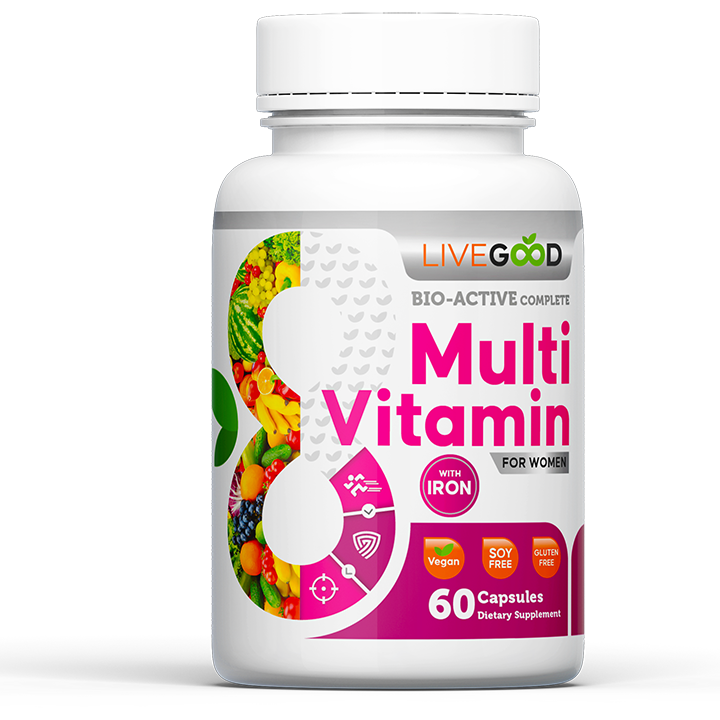
LiveGood Vitamins Guide: Bio-Active Multi-Vitamin, D3-K2 and Kids’ Gummies — Labels and Prices Compared
Disclaimer: This is a label guide based on LiveGood’s product pages and public research, checked on November 4, 2026. It is a label and price review, not a personal-use review. It is not medical advice. These products are not intended to diagnose, treat, cure, or prevent any disease.
What this guide covers
LiveGood sells three everyday vitamin products: the Bio-Active Complete Multi-Vitamin (a Men’s version and a Women’s version with iron), Organic D3-K2 2000, and Organic Children’s Multi-Vitamin Gummies. This guide puts all three in one place. We read each Supplement Facts panel, compare the amounts with official intake guidelines, show the price per day, and list the questions worth asking before you buy.
This guide is based on LiveGood’s official labels, product pages and published research. It does not promise any result.
Quick comparison
| Product | Serving | What stands out on the label | Retail / member price | Label says it is for |
|---|---|---|---|---|
| Bio-Active Complete Multi-Vitamin for Men | 2 capsules (30 servings) | B vitamins, A, C, E and minerals; L-methylfolate, methylcobalamin (B12), no iron, no vitamin D or K | $19.95 / $12.95 | Adults |
| Bio-Active Complete Multi-Vitamin for Women with Iron | 2 capsules (30 servings) | Same base formula plus 18 mg iron and more folate | $19.95 / $12.95 | Adults |
| Organic D3-K2 2000 | 1 capsule (60 servings) | 2,000 IU vitamin D3 + 90 mcg vitamin K2 (MK-7) | $19.95 / $9.50 | Adults |
| Organic Children’s Multi-Vitamin Gummies | 2 gummies (30 servings) | USDA Organic, includes D3 and K2, 4 g added sugar per serving | $29.95 / $15.95 | Children 3+, with an adult |
Prices are in U.S. dollars from the LiveGood shop on November 4, 2026. Member prices need a LiveGood membership ($9.95 a month on the same date). Prices can change and can differ by country.
1. Bio-Active Complete Multi-Vitamin (Men’s and Women’s)
What is on the label
Both versions use the same 2-capsule serving and most of the same amounts. These are the main lines from the current Supplement Facts panels:
| Nutrient (form) | Men’s | Women’s | % DV |
|---|---|---|---|
| Vitamin A (as beta-carotene) | 1,125 mcg | 1,125 mcg | 125% |
| Vitamin C (from organic acerola juice powder) | 90 mg | 90 mg | 100% |
| Vitamin E (as d-alpha tocopheryl succinate) | 67 mg | 67 mg | 447% |
| Vitamin B6 (as pyridoxine HCl) | 25 mg | 25 mg | 1,471% |
| Folate (as L-methylfolate) | 348 mcg DFE | 551 mcg DFE | 87% / 138% |
| Vitamin B12 (as methylcobalamin) | 200 mcg | 200 mcg | 8,333% |
| Biotin | 1,000 mcg | 1,000 mcg | 3,333% |
| Iron (as ferrous bisglycinate) | none | 18 mg | 100% |
| Zinc (as zinc citrate) | 15 mg | 15 mg | 136% |
| Selenium (as selenium L-methionine) | 100 mcg | 100 mcg | 182% |
| Iodine (as potassium iodide) | 150 mcg | 150 mcg | 100% |
| Blend | Marigold extract 120 mg (5 mg lutein, 2 mg zeaxanthin), L-glycine 30 mg, lycopene 10 mg | L-glycine 30 mg, cranberry 50 mg, marigold extract 120 mg (5 mg lutein, 2 mg zeaxanthin) | not set |
The panel also lists thiamin, riboflavin, niacin, pantothenic acid, choline, manganese, chromium, molybdenum and potassium. Other ingredients are a vegetable capsule and organic rice hulls. The label badges say vegan, soy free and gluten free.
What “bio-active” means on this label
- Folate is L-methylfolate (5-MTHF), not folic acid. Folic acid has to be converted in the body, while 5-MTHF is the main form of folate found in the blood. A 2014 review explains why folate, folic acid and 5-MTHF are not the same thing (Scaglione and Panzavolta, 2014).
- B12 is methylcobalamin. Supplements use several B12 forms, including cyanocobalamin, methylcobalamin, adenosylcobalamin and hydroxocobalamin. A 2017 review describes these forms and how each one is handled in the body (Paul and Brady, 2017).
- B6: the label and the test report don’t match. The current Supplement Facts label lists pyridoxine HCl, the most common form in supplements. The manufacturer’s 2025 Certificate of Analysis for the same products lists pyridoxine-5-phosphate (P-5-P). Ask LiveGood which form is in the bottle you buy. Either way, the amount is 25 mg.
You may see claims that “40–60% of people” carry the MTHFR gene variant. A study of more than 7,000 newborns in 16 areas found that how common the variant is varies widely by region and ethnic group (Wilcken et al., 2003). A form on a label tells you what is in the capsule. It does not tell you what it will do for you.
What is not in the multivitamin
The current Men’s and Women’s labels list no vitamin D, no vitamin K, no calcium and no magnesium. LiveGood sells vitamin D and K separately in D3-K2 2000 (below). If you are comparing this multi with another brand, check whether that brand includes these nutrients, because it changes the comparison.
Amounts worth a second look
- B6 at 25 mg is well above the Daily Value (1.7 mg). The U.S. upper limit for adults is 100 mg a day from all sources. In 2023 the European Food Safety Authority set a much lower adult upper limit of 12 mg a day, so 25 mg is over the EU limit (both cited by NIH ODS). Add up B6 from every product you take.
- Biotin at 1,000 mcg. High biotin intake can affect some lab test results. Tell your doctor or the lab about every supplement you take before a blood test (NIH ODS).
- Iron in the Women’s version. The label warns that accidental iron overdose is a leading cause of fatal poisoning in children under 6. Keep it locked away from kids. People who don’t need extra iron can ask a doctor whether the Men’s version (no iron) fits better.
Research on multivitamins mostly looks at whether people meet nutrient targets. One analysis of U.S. national survey data found that many adults did not reach some targets from food alone, and that supplement users had lower rates of falling short (Blumberg et al., 2017). That is about nutrient intake, not about health results.
2. Organic D3-K2 2000
| Item | Per capsule | % DV |
|---|---|---|
| Organic vitamin D3 (as cholecalciferol, from organic fermented culture media) | 50 mcg (2,000 IU) | 250% |
| Vitamin K2 (as menaquinone-7, MK-7) | 90 mcg | 75% |
Other ingredients: organic pullulan capsule and organic rice hulls. The bottle holds 60 capsules.
- Vitamin D3: The NIH Office of Dietary Supplements (ODS) lists 600–800 IU a day as the adult recommended intake. The upper limit is 4,000 IU a day from all sources (NIH ODS). The product page says to take 1–2 capsules. Two capsules equal 4,000 IU, which is the whole adult upper limit before you count food, fortified drinks or any other product. That is a good reason to ask a doctor before taking two.
- Why 2,000 IU shows up often: 2,000 IU of D3 a day was the dose used in VITAL, a large U.S. trial with about 25,000 adults (Manson et al., 2019). That tells you the dose has been studied in a big group. It does not tell you what it will do for you.
- Vitamin K2 as MK-7: ODS lists adequate intakes of 90–120 mcg a day for adults, so 90 mcg is at the low end. A study comparing K1 and MK-7 supplements found that MK-7 stayed in the blood much longer (Schurgers et al., 2007).
- Blood thinners: ODS notes that vitamin K can interact with warfarin. Talk to your doctor before adding any vitamin K product.
3. Organic Children’s Multi-Vitamin Gummies
| Item (per 2 gummies) | Amount | % DV* |
|---|---|---|
| Calories / total sugars / added sugars | 25 / 4 g / 4 g | — / — / 8% |
| Vitamin A (as retinyl acetate) | 210 mcg | 23% |
| Vitamin C (from organic acerola) | 20 mg | 22% |
| Vitamin D3 (cholecalciferol from organic lichen) | 20 mcg (800 IU) | 100% |
| Vitamin K2 (menaquinone-7) | 25 mcg | 21% |
| Folate (L-methyltetrahydrofolate) | 238 mcg DFE | 60% |
| Vitamin B12 (as methylcobalamin) | 2.4 mcg | 100% |
| Iron (as ferrous fumarate) | 2 mg | 11% |
| Zinc (as zinc citrate) | 2 mg | 18% |
| Iodine / selenium / chromium | 42 mcg / 50 mcg / 35 mcg | 28% / 91% / 100% |
*The label’s % DV column is for adults and children 4 years and older. Other ingredients: organic tapioca syrup, organic cane sugar, organic lemon juice concentrate, pectin, organic flavors and organic annatto.
- Age: the label says children 3+, 2 gummies a day, chewed well, under adult supervision. It is not labeled for children under 3.
- Sugar: 4 g of added sugar per serving. The American Heart Association suggests children aged 2–18 keep added sugar under 25 g a day (Vos et al., 2017), so this uses about one-sixth of that.
- Vitamin D: 800 IU per serving. The ODS upper limits are 2,500 IU a day for ages 1–3 and 3,000 IU for ages 4–8, from all sources. Don’t add an adult D3 product on top without asking your pediatrician.
- Gummies look like candy and contain iron, so store them out of reach.
Many children who eat a varied diet may not need a multivitamin. Ask your pediatrician first.
Price per day
| Product | Retail | Retail per day | Member | Member per day |
|---|---|---|---|---|
| Multi-Vitamin (Men’s or Women’s) | $19.95 / 30 days | about $0.67 | $12.95 | about $0.43 |
| Organic D3-K2 2000 (1 capsule) | $19.95 / 60 days | about $0.33 | $9.50 | about $0.16 |
| Children’s Gummies (2 gummies) | $29.95 / 30 days | about $1.00 | $15.95 | about $0.53 |
The member price only saves money if you also count the $9.95 monthly membership fee. For one bottle a month, retail may cost about the same or less. LiveGood also sells bundles (for example a “Daily Essentials Pack” with a multi, D3-K2 and a magnesium product), so compare the bundle price with buying items one by one.
How the three fit together
- The adult multi has no vitamin D or K, so an adult who wants those from LiveGood would look at D3-K2 2000 separately. Add up vitamin D from every source.
- Don’t double up: taking the adult multi with another multivitamin can push some nutrients (for example B6 and iron) higher than you expect.
- The children’s gummy is the only one labeled for kids. Don’t give the adult capsules to children.
Questions to ask before you buy
- Do I already get these nutrients from food or other products? Add up vitamin D, B6 and iron.
- Do I take any medicine (for example warfarin, which interacts with vitamin K) or have a medical condition? Ask a doctor or pharmacist first.
- Men’s or Women’s? The main differences are iron, folate and the small blend.
- Testing: LiveGood posts Certificates of Analysis (CoAs) for all four products on its website. They report vitamin amounts, microbes and heavy metals (lead, mercury, arsenic, cadmium), and almost every result is marked as meeting its specification. One exception: on the Women’s CoA, potassium tested at 50 mg against a stated minimum of 101 mg. The CoAs we read are issued by the manufacturer, Supplement Manufacturing Partner, Inc., not by an independent lab. They cover single lots made in 2024–2025, and the children’s gummy lot has a best-by date of 03/2026. Ask for a current CoA for the lot you buy.
- Will a membership pay off for how much I buy?
FAQ
Does the LiveGood multivitamin contain vitamin D?
Not on the current Men’s or Women’s label. Vitamin D and K2 are sold separately in Organic D3-K2 2000.
Is the B6 in the multivitamin the “active” P-5-P form?
It is not clear. The current label lists pyridoxine HCl, but the manufacturer’s 2025 Certificate of Analysis lists pyridoxine-5-phosphate. The forms that both documents agree on are L-methylfolate (folate) and methylcobalamin (B12). Ask LiveGood to confirm.
What is the difference between the Men’s and Women’s versions?
The Women’s version adds 18 mg of iron, has more folate (551 vs 348 mcg DFE), and has a slightly different blend (cranberry instead of lycopene). Price and serving size are the same.
Can I take two D3-K2 capsules a day?
The product page says 1–2 capsules. Two capsules equal 4,000 IU of D3, which is the adult upper limit from all sources combined, so talk to your doctor first.
From what age are the children’s gummies labeled?
Ages 3 and up, 2 gummies a day with an adult watching. Check with your pediatrician first.
Do I need a membership to buy?
No. Anyone can buy at the retail price. Member prices need the $9.95 monthly membership.
Where to see the products
You can see current labels and prices for all three products in the LiveGood shop: shoplivegood.com/formosa. If you want to learn how the membership works, see livegoodtour.com/formosa.
Sources
- LiveGood product pages and Supplement Facts panels: Bio-Active Complete Multi-Vitamin for Men, for Women with Iron, Organic D3-K2 2000, Organic Children’s Multi-Vitamin Gummies. Checked November 4, 2026.
- LiveGood Certificates of Analysis (livegood.com/certificatesOfAnalysis): Men’s Multivitamin lot 1115-2410-301 (report 4/15/2025), Women’s Multivitamin lot 1115-2410-300 (report 3/6/2025), Organic D3-K2 lot 1115LDC116913 (report 11/07/2024), Kids Organic Multivitamin Gummy lot 1115LMVG9538D (report 6/19/2024). Read November 4, 2026.
- NIH Office of Dietary Supplements. Vitamin D Fact Sheet for Health Professionals.
- NIH Office of Dietary Supplements. Vitamin K Fact Sheet for Health Professionals.
- NIH Office of Dietary Supplements. Vitamin B6 Fact Sheet and Biotin Fact Sheet for Health Professionals.
- Scaglione F, Panzavolta G. Folate, folic acid and 5-methyltetrahydrofolate are not the same thing. Xenobiotica. 2014;44(5):480-488. DOI 10.3109/00498254.2013.845705 · PMID 24494987
- Paul C, Brady DM. Comparative bioavailability and utilization of particular forms of B12 supplements with potential to mitigate B12-related genetic polymorphisms. Integr Med (Encinitas). 2017;16(1):42-49. PMID 28223907
- Wilcken B, et al. Geographical and ethnic variation of the 677C>T allele of 5,10 methylenetetrahydrofolate reductase (MTHFR): findings from over 7000 newborns from 16 areas world wide. J Med Genet. 2003;40(8):619-625. DOI 10.1136/jmg.40.8.619 · PMID 12920077
- Blumberg JB, et al. Contribution of dietary supplements to nutritional adequacy in race/ethnic population subgroups in the United States. Nutrients. 2017;9(12):1295. DOI 10.3390/nu9121295 · PMID 29182574
- Manson JE, et al. Vitamin D supplements and prevention of cancer and cardiovascular disease (VITAL). N Engl J Med. 2019;380:33-44. DOI 10.1056/NEJMoa1809944 · PMID 30415629
- Schurgers LJ, et al. Vitamin K-containing dietary supplements: comparison of synthetic vitamin K1 and natto-derived menaquinone-7. Blood. 2007;109(8):3279-3283. DOI 10.1182/blood-2006-08-040709 · PMID 17158229
- Vos MB, et al. Added sugars and cardiovascular disease risk in children: a scientific statement from the American Heart Association. Circulation. 2017;135(19):e1017-e1034. DOI 10.1161/CIR.0000000000000439 · PMID 27550974
Affiliate disclosure: This post contains affiliate links. If you buy through them, Kevin Liu may earn a commission at no extra cost to you. We do not make income promises.
Medical disclaimer: This article is for general education only and is not medical advice. Supplements are not intended to diagnose, treat, cure, or prevent any disease. Talk with a qualified healthcare professional before starting any supplement, especially if you are pregnant, nursing, take medications, have a medical condition, or are choosing a product for a child. Individual results vary.
